
Sarah Ahmadi is a marketing and organizational leader whose work bridges professional practice and academic research in the field of experience design. With nearly three decades of experience in fundraising, marketing, and institutional development, she has worked across international and not-for-profit contexts, supporting organizations committed to meaningful social impact.

Her work is grounded in a deep understanding of how systems, people, and purpose intersect. She has led initiatives in advancement, communications, and strategic planning, while building collaborative teams and navigating complex organizational challenges.

A central thread in Sarah’s career has been a commitment to community and the development of the next generation. She has held leadership roles in educational and training organizations, particularly within the performing arts and sport, where she has supported both high-performance and recreational pathways. Her work focuses on creating environments that foster growth, belonging, and long-term development.

Over the past decade, Sarah has extended this work into academia. Her research explores customer experience in phygital (digital–physical) environments, with a particular focus on the student/educator/organizational design, audit and management of relationships and how they shape meaning, value, and engagement. Through her work, she brings together practical insight and theoretical development, contributing to emerging conversations in experience design and hybrid learning systems.

Stories
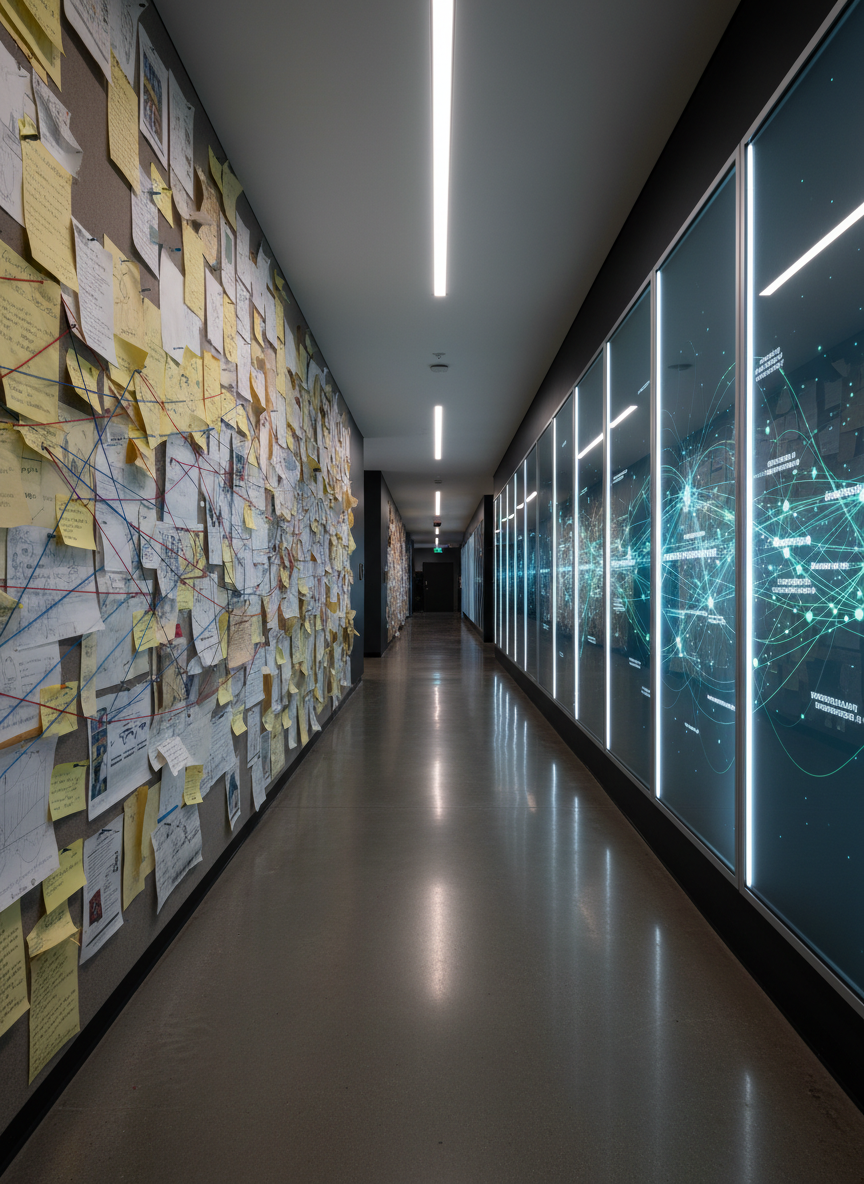
A long corridor in an educational building is divided visually into two halves: on one side, analog bulletin boards covered with layered paper notices, pinned index cards, and string connecting key concepts; on the opposite side, sleek digital panels show the same concepts as an interactive network map with glowing nodes and connecting lines. Cool, even LED lighting along the ceiling casts clean, linear reflections on the digital panels and softer shadows on the paper surfaces. Captured in photographic realism with a centered, vanishing-point composition, the mood is reflective and investigative, highlighting the movement from fractured information to connected understanding in a phygital environment.

Hope D.

“Our hybrid seminar felt chaotic until we named the fracture—then it became a shared site of inquiry.”
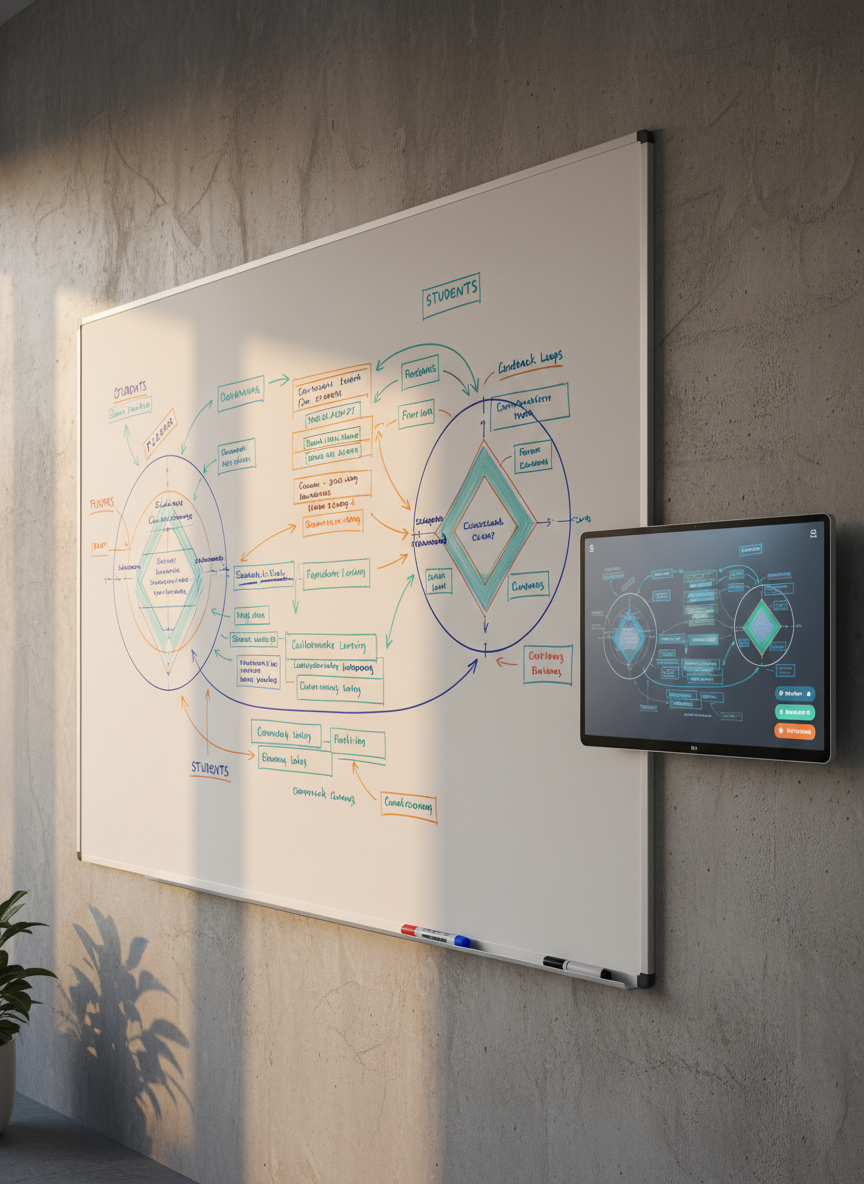
A large, rectangular whiteboard mounted on a concrete wall is filled with a meticulously drawn DPCX-inspired framework: intersecting circles, layered rectangles, and arrows represent relationships between “students,” “educators,” and “peers,” though no people are shown. Beside it, a thin-bezel monitor mirrors the same framework in a polished, digital visualization with subtle gradients and interactive-looking buttons. Warm afternoon light enters from an unseen window, grazing the whiteboard surface and casting gentle shadows from dry-erase markers on a narrow ledge. Photographic realism at a three-quarter angle, with moderate depth of field, creates an academic yet approachable mood that underscores theory translating into phygital practice.

Hope D.

“Being invited to pause, reflect, and redesign the digital space turned my frustration into a sense of co-authorship.”
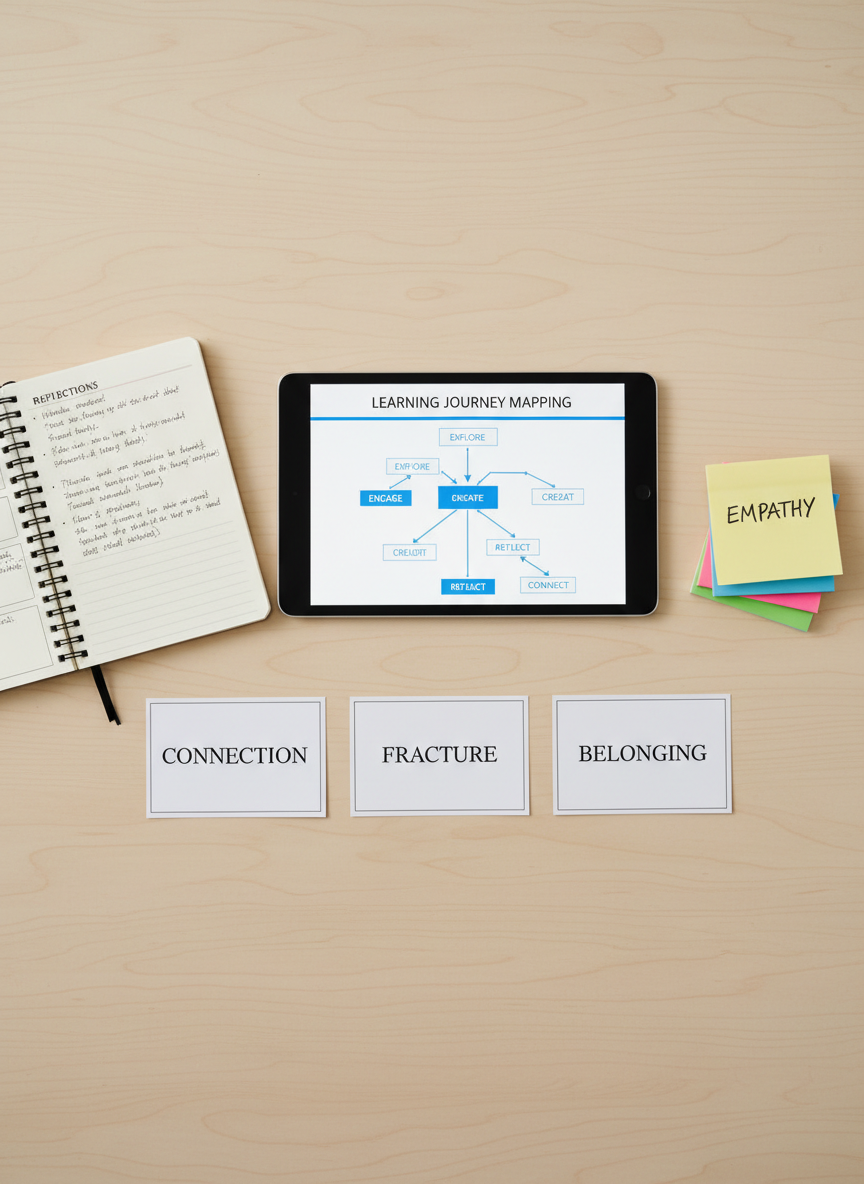
A modern classroom table holds a carefully arranged combination of physical and digital learning artifacts: a slim tablet displaying a complex flow diagram of a learning journey, a spiral-bound notebook open to handwritten reflections, printed cards with single words like “connection,” “fracture,” and “belonging,” and a small stack of color-coded sticky notes. The tabletop is a pale, matte birch surface under diffused overhead lighting, with soft shadows that define each object’s edges. Photographic realism from a top-down perspective, with sharp focus and balanced composition, creates a calm, analytical mood that suggests structured research into phygital learning experiences.

Hope D.

“DPCX gave our team a language for talking about discomfort without blaming students, tools, or ourselves.”
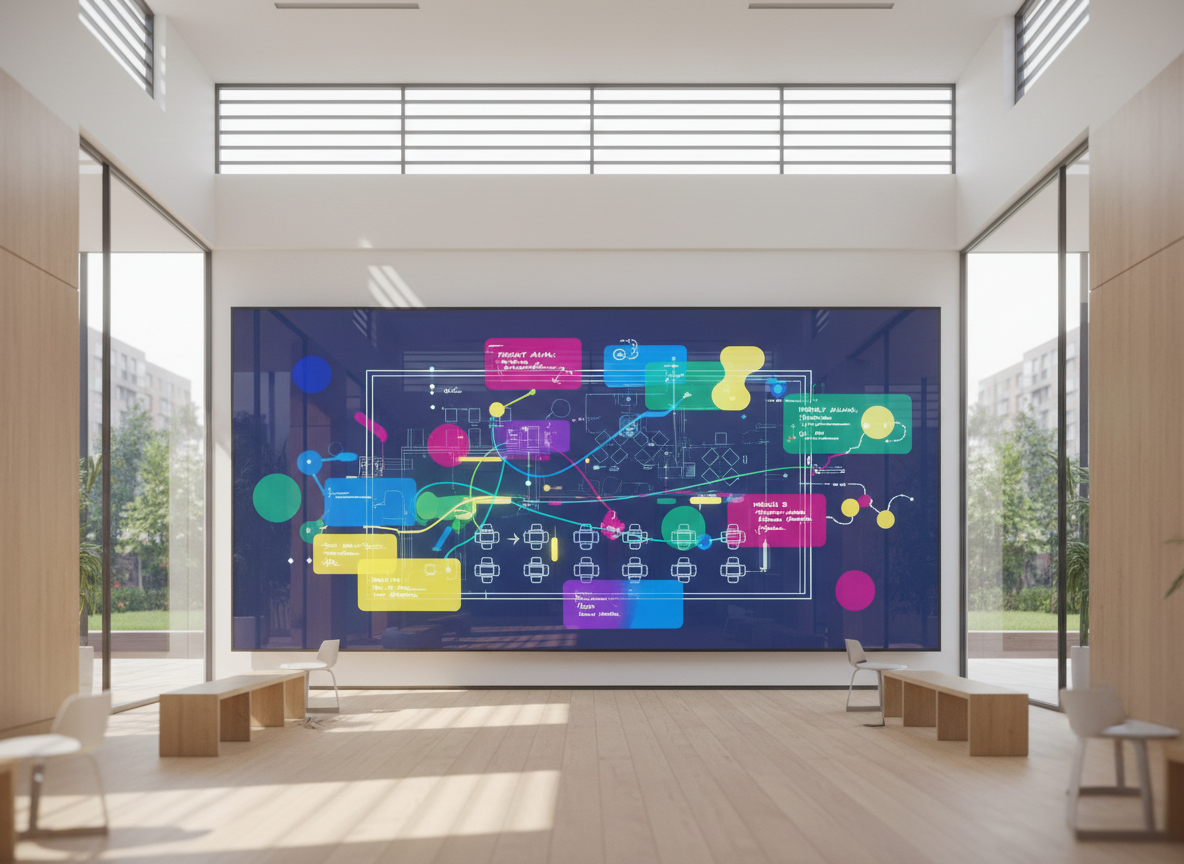
A large, sleek interactive display wall shows a seamless blend of a digital learning dashboard and a physical classroom layout, with colorful abstract shapes representing data points, sticky notes, and connection lines. The wall is mounted in a minimalist, glass-walled educational space with clean white surfaces and light wood accents. Soft daylight flows through high windows, creating gentle reflections on the screen’s glossy surface and faint shadows on the floor. Photographic realism at an eye-level angle, with a shallow depth of field that keeps the display crisp while the room softly blurs. The atmosphere feels professional, contemplative, and slightly futuristic, emphasizing how physical and digital experiences intersect in education.

Hope D.

“As a designer, mapping fractures across platforms helped me see where belonging actually breaks—and how to repair it.”

Contact Me

Are you interested in the work that is being done in phygital education. Why not reach out and let’s talk!

← Back

Thank you for your response. ✨